

Stock page SEO is defined as the practice of making individual product or financial listing pages discoverable, indexable, and rankable in organic search. Without it, your stock pages are invisible to the buyers and investors actively searching for exactly what you offer. The reason why stock pages need SEO comes down to a simple truth: organic search is the highest-intent traffic channel available, and stock pages are uniquely difficult for search engines to process at scale. Google’s crawlers face real constraints when dealing with large inventories, templated content, and duplicate data. Getting this right separates stock sites that grow steadily from those that stall.
Why stock pages need SEO: the indexation problem
The most urgent reason to invest in SEO for stock pages is indexation. Google does not automatically index every page on your site. Its crawl budget, the number of pages it will crawl and index within a given timeframe, scales with your domain’s authority and engagement signals. Sites without strong backlink profiles and user engagement suffer badly here. As little as 2% of a 100,000-page site can end up indexed, with millions of pages discovered but left out of search results entirely. That means the vast majority of your stock listings never appear in front of a potential buyer.
The fix requires a combination of technical decisions. Three tools do most of the heavy lifting:
- Noindex directives: Apply
noindexto low-value pages such as parameterised filter results, snapshot pages, and duplicate category views. This preserves your crawl budget for pages that actually matter. - Canonical tags: Use canonical tags to tell Google which version of a page is the authoritative one. This prevents duplicate content from splitting your ranking signals across multiple URLs.
- Internal linking: Build a clear internal link structure that passes authority from high-traffic pages down to individual stock listings. Pages with more internal links get crawled more frequently.
Understanding how Google reads and prioritises your site is the foundation of everything else. West Legacy Group covers this in detail in its guide on crawl budget and indexing, which is worth reading before you touch your sitemap.
Pro Tip: Audit your Google Search Console coverage report monthly. If the “Discovered, currently not indexed” count is rising, your crawl budget is being wasted on low-value pages.
| Technical issue | Recommended fix |
|---|---|
| Duplicate parameterised URLs | Add canonical tags pointing to the primary URL |
| Low-value filter or snapshot pages | Apply noindex/follow directives |
| Weak internal link structure | Link from category and hub pages to individual stock listings |
| Poor crawl frequency | Improve domain authority through quality backlinks |
Why do long-tail keywords outperform broad terms for stock pages?
Broad keyword targeting in stock and trading SEO produces poor results. Competing for a term like “stocks” or “shares” puts you against financial institutions, news publishers, and global platforms with decades of domain authority. You will not win that fight with a small or mid-sized site. Long-tail, high-intent keywords convert better because they reflect what a buyer or investor is actually ready to do, not just browse.

The difference is significant in practice. A search for “Tesla stock alerts” signals that the user wants a specific product or notification service. A search for “stocks” signals almost nothing about intent. Targeting the specific query puts your page in front of someone who is ready to act. That is the core of how stock pages benefit from SEO when keyword strategy is done correctly.
A structured approach to keyword research for stock pages looks like this:
- Start with your product catalogue. Every stock, ticker, or product category is a keyword seed. Build from what you actually sell or list.
- Layer in buyer intent modifiers. Words like “buy,” “alert,” “price,” “analysis,” and “forecast” signal active intent. Pair them with your seed terms.
- Check search volume against competition. Use tools like Google Search Console or Google Keyword Planner to find queries with real volume and manageable competition.
- Group by page type. Individual stock listing pages target ticker-specific queries. Category pages target broader segment terms. Blog or analysis pages target informational queries that build topical authority.
- Prioritise by business value. Not every keyword deserves a page. Focus first on the stocks or products that generate the most revenue or margin.
One startup that followed this approach saw web traffic referrals triple within six months by targeting high-intent long-tail keywords rather than competing on broad terms. The lesson is clear: specificity wins.
Pro Tip: Search the exact phrases your customers use in support tickets or enquiries. Real customer language is often the best source of long-tail keyword ideas.
How do you create unique content for stock pages?
Templated content is the default for stock pages, and it is also the fastest route to a Google penalty. When every page uses the same data table layout with only the ticker symbol changed, Google classifies those pages as thin content. Google’s AI-first indexing demands that each page offer something genuinely useful beyond what a data feed provides automatically.
The good news is that adding unique content does not require a full editorial team. Small additions make a measurable difference:
- Earnings timelines: Add a brief summary of the company’s last two or three earnings results. This is factual, useful, and unique to that page.
- Analyst ratings: Include a summary of current analyst consensus, even if it is sourced from a public feed. Present it with brief context rather than a raw number.
- Related news snippets: Pull in the two or three most recent news headlines relevant to that stock or product. Link to the original source.
- Market context: A single paragraph explaining where this stock or product sits within its sector adds genuine editorial value.
- User-generated signals: Reviews, ratings, and Q&A sections add fresh content automatically and build trust signals.
Financial stock pages face an additional challenge. Google classifies them under the YMYL category, which stands for “Your Money or Your Life.” YMYL pages are held to the highest E-E-A-T standards, meaning Google scrutinises the expertise, experience, authority, and trustworthiness of the content and the site behind it. A page that looks like it was generated in bulk with no human oversight will not rank well, regardless of how well it is technically optimised.
Pro Tip: Even a single paragraph of original analysis per page, written or reviewed by a human, signals editorial oversight to Google. You do not need to write an essay for every listing.
Practical SEO strategies for stock pages in 2026
Knowing the theory is one thing. Applying it with limited time and budget is another. The most effective approach for e-commerce managers and small business owners is to prioritise ruthlessly rather than try to fix everything at once.
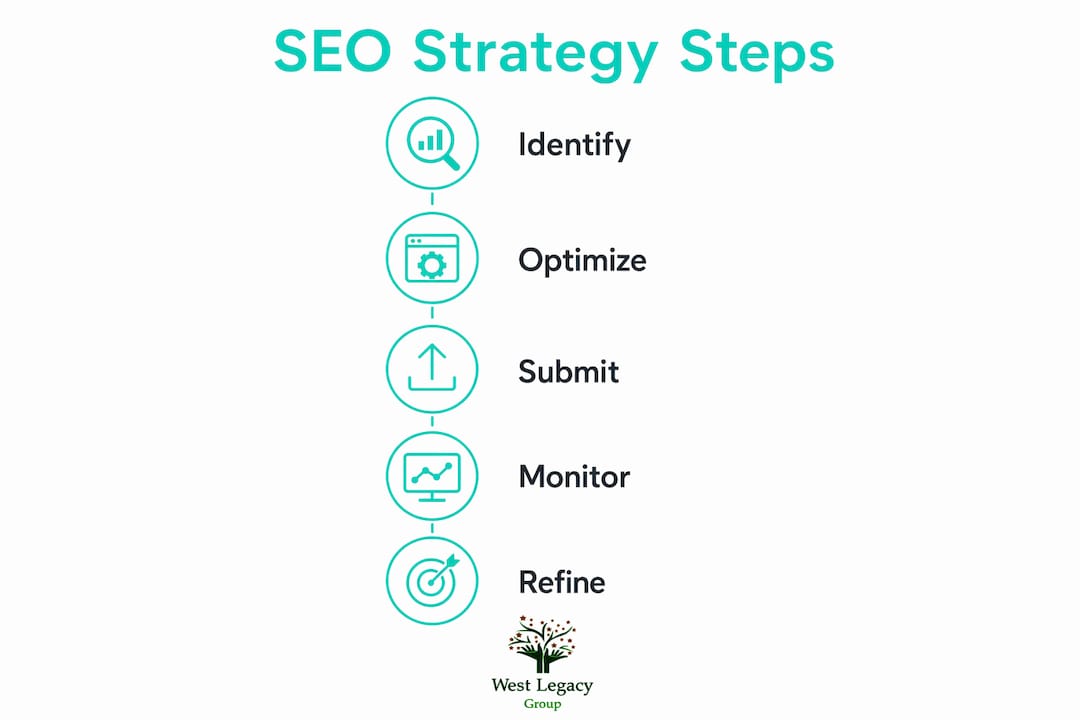
Start by identifying which stock pages have the most search demand and the highest business value. Use Google Search Console to find pages that already receive impressions but rank outside the top ten. These are your quickest wins. A small improvement in content quality or internal linking can move them onto page one.
Sitemap management matters more than most owners realise. Submit an XML sitemap that includes only the pages you want indexed. Remove low-value pages from the sitemap even if they remain live on the site. This signals to Google which pages deserve attention. Pair this with a clear canonical strategy so that filtered or sorted versions of your stock listings do not compete with the primary page.
Monitoring is non-negotiable. Google Search Console shows you which pages are indexed, which are excluded, and why. Check the coverage report weekly when you are actively making changes. Track click-through rates on your top stock pages and test title tag and meta description changes to improve them. The common ecommerce SEO mistakes that West Legacy Group documents are worth reviewing, because many of them apply directly to stock page management.
SEO also compounds over time. Organic visibility builds brand signals, which in turn drive more branded searches, which reinforce authority. Companies that prioritise organic traffic consistently outperform those that rely solely on paid channels. The investment takes time to show results, but the returns accumulate in a way that paid advertising does not.
Key takeaways
Stock pages without SEO are invisible to the buyers and investors actively searching for them, and fixing that requires addressing indexation, keyword targeting, and content quality together.
| Point | Details |
|---|---|
| Indexation is the first priority | Use noindex directives and canonical tags to protect crawl budget on large stock sites. |
| Long-tail keywords drive conversions | Target specific, intent-driven queries like ticker-specific terms rather than broad financial terms. |
| Thin content triggers penalties | Add unique analysis, news context, and editorial oversight to every stock page. |
| E-E-A-T standards are strict | Financial pages face YMYL scrutiny, so authority and trustworthiness signals are non-negotiable. |
| SEO compounds over time | Organic visibility builds branded search volume, which reinforces authority and long-term growth. |
What I have learned from optimising stock pages over time
My honest view is that most e-commerce managers underestimate how patient you need to be with stock page SEO. The temptation is to index everything, target every keyword, and wait for traffic to arrive. That approach almost always backfires. You end up with thousands of thin, duplicate pages competing with each other, a crawl budget spread too thin, and Google ignoring most of your site.
The sites I have seen perform best take the opposite approach. They index fewer pages deliberately, make each one genuinely useful, and build authority slowly through quality backlinks and consistent content. The backlink strategy matters more than most people acknowledge. Without domain authority, even perfectly optimised pages sit unindexed.
The other thing I would tell any small business owner is this: do not try to compete on every stock or product at once. Pick twenty pages, make them excellent, and watch what happens. The compounding effect of authority is real. Once Google trusts your site, it indexes new pages faster and ranks existing ones higher. That trust takes time to build, but it is far more durable than any paid traffic campaign.
— Christopher
How West Legacy Group supports stock page SEO
West Legacy Group has spent years helping small businesses and e-commerce managers build SEO strategies that actually hold up under Google’s scrutiny.
If your stock pages are sitting unindexed or ranking poorly despite your efforts, the issue is almost always one of three things: crawl budget mismanagement, thin content, or weak domain authority. West Legacy Group’s custom SEO plan builder walks you through a structured approach to fixing all three, at a price point built for small businesses. You can also explore the full range of SEO reporting and tracking services to monitor your progress once changes are in place. Getting the foundations right now pays dividends for years.
FAQ
What is stock page SEO?
Stock page SEO is the process of making individual product or financial listing pages discoverable and rankable in organic search. It covers technical setup, keyword targeting, and content quality.
Why do stock pages struggle with Google indexation?
Google’s crawl budget scales with domain authority, so sites with weak backlink profiles often see only a fraction of their pages indexed. Noindex directives and canonical tags help direct crawl resources to your most valuable pages.
What are long-tail keywords and why do they matter for stock pages?
Long-tail keywords are specific, multi-word search queries that reflect active buyer intent. They convert better than broad terms because they match what a user is ready to do, not just research.
How does E-E-A-T affect stock page rankings?
E-E-A-T standards apply most strictly to YMYL pages, which include financial stock listings. Google rewards pages that demonstrate genuine expertise, clear authorship, and trustworthy sourcing.
How long does SEO take to show results on stock pages?
SEO results on stock pages typically take three to six months to become measurable, with authority and ranking gains compounding over time as domain trust builds.