

97% of consumers say online reviews influence their purchasing decisions. For Australian small business owners, that figure makes reputation monitoring less of a nice extra and more of a core business function. Monitoring your small business online reputation means actively tracking customer reviews, brand mentions, and social media conversations across every platform where your audience spends time, then responding in ways that build trust and attract new customers.
The core elements to monitor include:
- Google Business Profile reviews — the single most visible channel for local businesses
- Social media mentions — across Facebook, Instagram, LinkedIn, and TikTok
- Third-party review sites — including Yelp, True Local, and industry-specific directories
- Brand mentions in forums and blogs — often the earliest signal of emerging issues
- Direct customer feedback — surveys and post-purchase emails
63% of consumers check Google reviews before visiting a local business, which positions Google Business Profile as your primary monitoring focus. Beyond Google, Wharton research confirms that active reputation management functions as a marketing strategy in its own right, not just defensive damage control.
Table of Contents
- How to set up a reputation monitoring routine that actually works
- West Legacy Group supports your online presence from the ground up
- Key takeaways
How to set up a reputation monitoring routine that actually works
A consistent routine separates businesses that catch problems early from those that discover them weeks later. Start with the foundations, then layer in automation.
Step 1: Claim and complete every listing. Claiming your listings on Google Business Profile, Yelp, True Local, and relevant industry directories gives you control over your business information and unlocks review notifications. Incomplete or unclaimed profiles create blind spots.
Step 2: Set up Google Alerts. Create alerts for your business name, owner names, key staff names, and common misspellings. Monitoring misspellings is a detail most small businesses overlook, yet indirect mentions in forums and blogs often surface before formal reviews appear.
Step 3: Enable notifications on every review platform. Turn on email alerts for Google, Facebook, and any review sites relevant to your industry so no new review goes unnoticed.
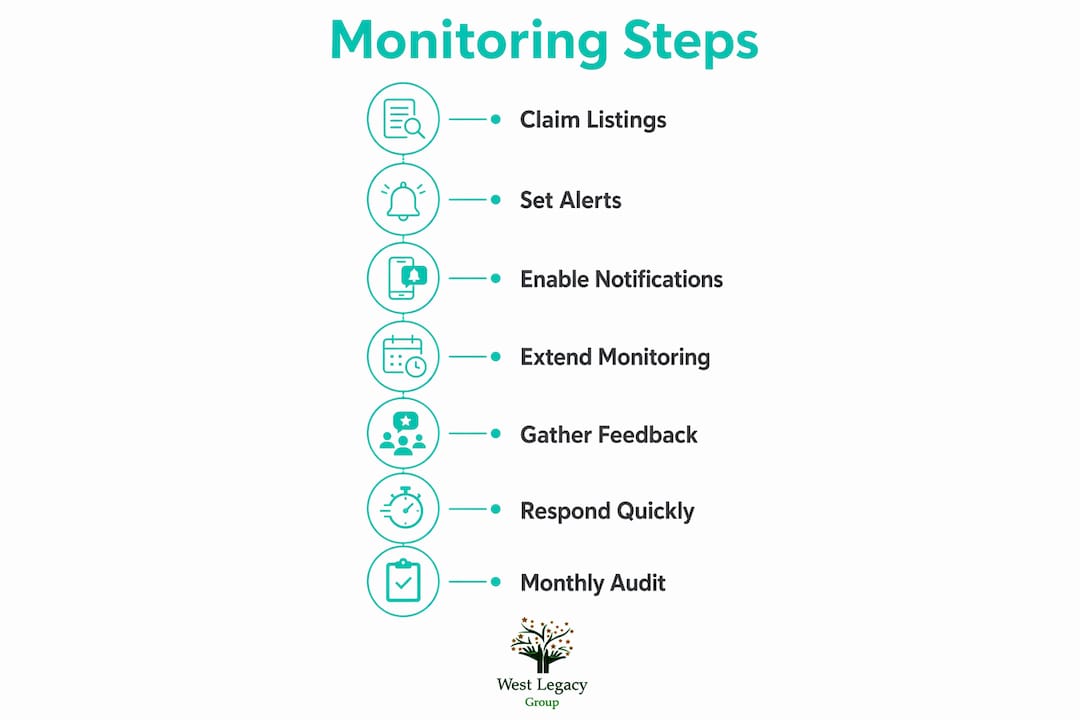
Step 4: Extend social monitoring. Monitoring beyond Facebook and X to include Instagram, LinkedIn, and TikTok uncovers broader consumer sentiment and potential risks before they escalate.
Step 5: Integrate direct feedback channels. Customer surveys and post-purchase emails give you early warning signals that complement what appears publicly online.
Your response practice matters as much as your monitoring setup. Responding to negative reviews within 24 hours reduces reputational damage and builds goodwill. Silence is consistently the worst option. A structured response plan keeps your tone calm and professional regardless of who is handling the reply that day.
On fake reviews: Australian Consumer Law prohibits misleading conduct, which includes publishing or soliciting fake reviews. If you receive a fraudulent review on Google, report it through the platform’s review management tools and document your case. Respond publicly and professionally while the dispute is in progress.
A practical weekly rhythm looks like this:
- Check Google Business Profile and primary review platforms for new reviews
- Scan Google Alerts digest for brand mentions
- Review social media notifications and tagged posts
- Respond to any unanswered reviews within the 24-hour window
- Log recurring complaints for monthly analysis
Monthly, audit your listings for accuracy, review your local SEO checklist to confirm reputation signals are supporting your search rankings, and send a customer satisfaction survey to recent clients. Automating review requests and centralising monitoring into a single dashboard produces stronger, more consistent results than ad-hoc manual checks. For businesses building their promotional presence across both digital and physical channels, consistency in brand messaging reinforces the trust your reviews are building online.
West Legacy Group supports your online presence from the ground up
Small business reputation starts with a credible, well-built website. Without one, even a strong review profile loses impact the moment a potential customer clicks through and finds something outdated or hard to navigate.
West Legacy Group has been supporting Australian small businesses for over 20 years, offering affordable website design packages built specifically for small business budgets, with no bloated agency pricing. Services are available as single items or subscription packages, so you pay for what you actually need. If your digital presence needs a stronger foundation to match the reputation you are building, get in touch with West Legacy Group to find the right starting point.
Key takeaways
Proactive, consistent reputation monitoring is the single most effective way for Australian small businesses to build customer trust and protect their brand online.
| Point | Details |
|---|---|
| Google Business Profile first | 63% of consumers check Google reviews before visiting a local business. — prioritise this platform. |
| Claim every listing | Unclaimed profiles create blind spots; claiming them unlocks review notifications and control. |
| Respond within 24 hours | Addressing negative reviews promptly reduces damage and demonstrates genuine customer care. |
| Automate and centralise | Automating review requests and consolidating monitoring produces stronger, more consistent results. |
| West Legacy Group | Supports small businesses with affordable website design and digital services that underpin a credible online presence. |