

Local SEO for ecommerce is defined as the practice of optimising an online store to rank in geographically relevant search results, attracting nearby customers who are ready to buy. This is distinct from general ecommerce SEO, which targets broad national or global audiences. Local ecommerce SEO focuses on geographic keywords, Google Business Profile, and the Google Map Pack to capture high-intent shoppers in a specific area. Around 75% of users never scroll past the first page of search results. That single fact makes ranking in local spots not a nice-to-have, but a business necessity. Whether you run a boutique in Bendigo or a custom printing service in Brisbane, local SEO connects your store to the customers most likely to convert.
What is local SEO for ecommerce, and how does it differ from general ecommerce SEO?
Local SEO for ecommerce is the targeted process of ranking an online store for location-based search queries. General ecommerce SEO targets broad terms like “buy running shoes.” Local ecommerce SEO targets terms like “buy running shoes Melbourne” or “running shoes near me.” The intent behind those searches is different, and so is the buyer. Local searchers are typically further along in the buying process and more likely to complete a purchase.
The core differences come down to four areas:
- Geographic keywords. Local SEO integrates city names, suburb references, and “near me” phrases into product pages, meta titles, and landing pages. These location signals tell Google which geographic market your store serves.
- Google Business Profile. A fully optimised Google Business Profile places your store in the Google Map Pack, the three-business block that appears above organic results for local queries. This is prime real estate for any ecommerce business with a local footprint.
- Local citations and backlinks. Citations from local websites and backlinks from regional news outlets, blogs, and business associations increase your prominence in local search rankings. National link-building campaigns rarely deliver the same local signal strength.
- Location-specific landing pages. A dedicated page for each suburb or city you serve gives Google clear geographic context. These pages also give local customers a more relevant experience than a generic homepage.
Local SEO fits within your broader ecommerce SEO strategy rather than replacing it. Think of it as a layer that sits on top of your existing SEO work, adding geographic precision to the keywords, content, and technical foundations you already have in place. A solid local SEO checklist helps you build that layer methodically.
Which ecommerce businesses benefit most from local SEO?

Not every ecommerce business needs local SEO, but more qualify than most owners realise. The businesses that gain the most are those with a geographic connection to their customers, whether through a physical location, a delivery zone, or a regional market focus.
The clearest candidates include:
- Stores with a physical shopfront or showroom. If customers can visit you in person, local SEO drives both foot traffic and online orders from people in your area.
- Ecommerce businesses offering local delivery or click-and-collect. A food retailer delivering within 20 kilometres of their warehouse, or a furniture store offering same-day delivery in a specific city, both benefit directly from local search visibility.
- Service area businesses without a storefront. You do not need a physical shopfront to qualify. Registering as a Service Area Business on Google Business Profile lets you target specific delivery regions without a public address.
- Regional brands competing against national chains. A local fashion label or independent bookshop can outrank a national chain for suburb-level searches by building stronger local signals.
- Niche product categories with local demand. Custom printing, specialty food, local gift boxes, and trade supplies all attract customers who prefer buying locally and searching with city-specific terms.
The common thread is geographic intent. If your customers are searching with a location in mind, local SEO is the tool that puts your store in front of them at exactly the right moment.
How to execute effective local SEO strategies for ecommerce sites
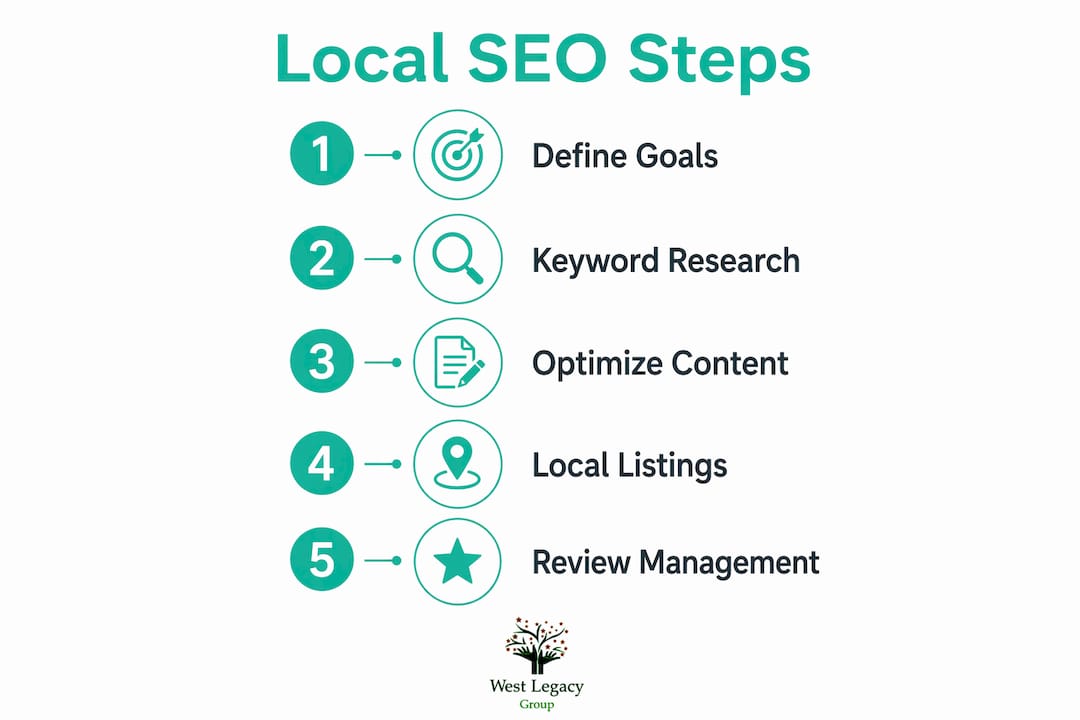
Effective local SEO for ecommerce requires consistent work across several areas. These steps build on each other, so working through them in order gives you the strongest foundation.
-
Optimise your Google Business Profile. Complete every field: business name, category, service areas, hours, photos, and a description that includes your primary geographic keywords. If you deliver to multiple suburbs, list each one in your service area settings. An incomplete profile is a missed ranking opportunity.
-
Target transactional local keywords. High-intent searches like “buy [product] near me” or “[product] delivery in [city]” are where local ecommerce wins are made. Use these phrases in product page titles, meta descriptions, and heading tags. Tools like Google Search Console show you which location-based queries already bring traffic to your site.
-
Generate and manage customer reviews. 49% of consumers trust online reviews as much as personal recommendations. Reviews are not just a trust signal for customers; they directly influence your Google Map Pack ranking. Ask every customer for a review after purchase, and respond to every review you receive, positive or negative. A list of review platforms helps you spread your review presence beyond Google alone.
-
Create localised landing pages. Build a dedicated page for each city or region you serve. Include the location name in the H1, URL, and body content. Add locally relevant details: delivery timeframes to that area, local stockists, or customer stories from that region. These pages give Google a clear geographic signal and give local customers a reason to stay on your site.
-
Build local citations and backlinks. Submit your business details to Australian business directories, local chambers of commerce, and industry associations. Pursue backlinks from regional news sites and local blogs. Local citations and backlinks from relevant local sources carry more weight for local rankings than generic directory listings.
-
Fix your technical SEO foundations. Fast-loading, mobile-friendly pages with structured data rank better for local ecommerce searches. Use schema markup to tell Google your business type, location, and product details. Check your Core Web Vitals regularly and fix any pages that load slowly on mobile.
Pro Tip: Add LocalBusiness schema markup to your location pages. This structured data helps Google understand your geographic service area and can improve your chances of appearing in the Google Map Pack for relevant searches.
Common pitfalls and what AI-driven search means for local ecommerce SEO
Local SEO for ecommerce has several traps that catch even experienced marketers. Knowing them in advance saves you time and budget.
The biggest misconception is that you need a physical storefront to qualify for local SEO. This is wrong. Registering as a Service Area Business on Google Business Profile lets you define your delivery zones and appear in local results without a public address. Many successful ecommerce businesses operate entirely from warehouses or home offices and still rank locally.
The second major mistake is targeting informational keywords instead of transactional ones. Ranking for “how to choose a coffee grinder” brings readers. Ranking for “buy coffee grinder Geelong” brings buyers. Ignoring transactional keywords is one of the most common and costly local SEO errors in ecommerce.
Google’s AI Overviews add a new layer of complexity. AI Overviews now appear for some local queries, and they reduce click-through rates for informational searches more than for transactional ones. This makes the shift toward transactional intent keywords even more urgent. If your content answers “what is” questions rather than “buy” or “near me” queries, AI Overviews will absorb that traffic before it reaches your site.
Other pitfalls to watch for:
- Chasing review volume over review quality. 50 or more reviews averaging 4.5 stars outperform a smaller pool of perfect five-star reviews for both rankings and click-through rates. Focus on building a consistent, honest review base rather than gaming the system.
- Neglecting mobile performance. Most local searches happen on mobile devices. A slow or poorly formatted mobile experience kills conversions before they start.
- Ignoring the balance between local and national reach. Local SEO should complement your national strategy, not replace it. Avoid over-localising product pages that serve customers across Australia.
Pro Tip: Use Google Search Console to filter your queries by location. This shows you exactly which geographic terms drive traffic to your site and where you have gaps worth targeting.
Avoiding these mistakes is easier when you have a clear picture of where your current SEO stands. A review of common ecommerce SEO mistakes gives you a practical starting point.
Key takeaways
Local SEO for ecommerce is the most direct way to connect an online store with nearby, high-intent buyers through geographic keywords, Google Business Profile, and transactional search signals.
| Point | Details |
|---|---|
| Define your geographic intent | Target transactional keywords like “buy [product] near me” rather than broad informational terms. |
| Use Service Area Business profiles | You do not need a storefront; register a Service Area Business on Google to target delivery regions. |
| Prioritise review quality | Aim for 50 or more reviews at a 4.5-star average to outperform competitors in the Google Map Pack. |
| Build localised landing pages | Create a dedicated page for each city or suburb you serve, with location-specific content and schema markup. |
| Adapt to AI-driven search | Focus on transactional queries, as Google AI Overviews affect informational searches more than buying-intent searches. |
Why I think most ecommerce businesses underestimate local SEO
Working with ecommerce businesses across regional Australia, I see the same pattern repeatedly. Owners invest in national SEO campaigns and wonder why their conversion rates stay flat. The answer is almost always the same: they are attracting the wrong traffic.
Local buyers convert at a higher rate than broad national audiences. They have a specific need, a specific location, and they are ready to act. When you target them with geographic precision, the return on your SEO investment improves noticeably.
The shift toward AI-driven search results makes this even more pressing. Informational content is increasingly absorbed by AI Overviews before it reaches your site. Transactional and local content is far more resilient. Businesses that build their local SEO foundations now, before competitors catch on, will hold a significant advantage through 2026 and beyond.
My advice is simple: start with your Google Business Profile, pick your top five transactional local keywords, and build one strong location page. Then measure what happens. The results will tell you where to go next. If you want a structured approach, building your own SEO plan gives you a clear framework to work from.
— Christopher
West Legacy Group can help you rank locally
West Legacy Group has spent over 20 years helping small businesses build lasting digital foundations, and local SEO for ecommerce is one of the areas where we see the clearest results for our clients.
If your online store serves a specific region or offers local delivery, there is a real opportunity to capture more of that local search traffic. West Legacy Group offers digital marketing services in Bendigo and across regional Australia, with SEO plans designed to fit small business budgets. Every plan is built around your specific market, your products, and the geographic areas you want to win. Reach out to the West Legacy Group team to find out what local SEO can do for your store.
FAQ
What is local SEO for ecommerce?
Local SEO for ecommerce is the process of optimising an online store to appear in geographically relevant search results, targeting customers who search with location-based or “near me” intent. It uses geographic keywords, Google Business Profile, and local citations to drive nearby, high-intent traffic.
Do I need a physical store to use local SEO for ecommerce?
No. Ecommerce businesses can register as a Service Area Business on Google Business Profile to target specific delivery regions without a public storefront address. This makes local SEO accessible to warehouse-based and home-based online retailers.
How do reviews affect local ecommerce SEO?
Reviews directly influence Google Map Pack rankings and click-through rates. A base of 50 or more reviews averaging 4.5 stars outperforms a smaller pool of five-star reviews for both rankings and customer trust.
What keywords should ecommerce businesses target for local SEO?
Target transactional keywords with geographic modifiers, such as “buy [product] near me” or “[product] delivery in [city].” These high-intent searches attract buyers rather than browsers and are less affected by Google AI Overviews than informational queries.
How does Google’s AI affect local ecommerce SEO?
Google AI Overviews reduce organic click-through rates for informational local queries more than for transactional ones. Ecommerce businesses that focus on buying-intent and location-specific keywords maintain stronger visibility in AI-influenced search results.