

Local SEO for trades is the practice of optimising your online presence so your trade business appears prominently when nearby customers search for services you offer. Unlike broad search engine optimisation, local SEO targets suburb-level and city-level searches, connecting plumbers, electricians, builders, and other trade professionals with clients who are ready to hire right now. Tools like Google Business Profile sit at the centre of this approach, making it the single most powerful asset a tradie can control. This guide covers what local SEO for trades actually involves, why it matters in 2026, and how to avoid the mistakes that cost tradies jobs every week.
What is local SEO for trades and why does it matter?
Local SEO for trades is defined as the targeted process of optimising a trade business’s digital presence to rank in geographically relevant search results. The industry term is “local search engine optimisation,” and it covers everything from your Google Business Profile to suburb-specific pages on your website. 46% of all Google searches carry local intent. That figure means nearly half of every search made on Google is someone looking for a product or service near them.
For trade businesses, this is a significant opportunity. 78% of mobile local searches result in an offline purchase within 24 hours. A homeowner searching “emergency electrician Parramatta” on their phone is not browsing. They are ready to book. Local SEO puts your business in front of that person at exactly the right moment.
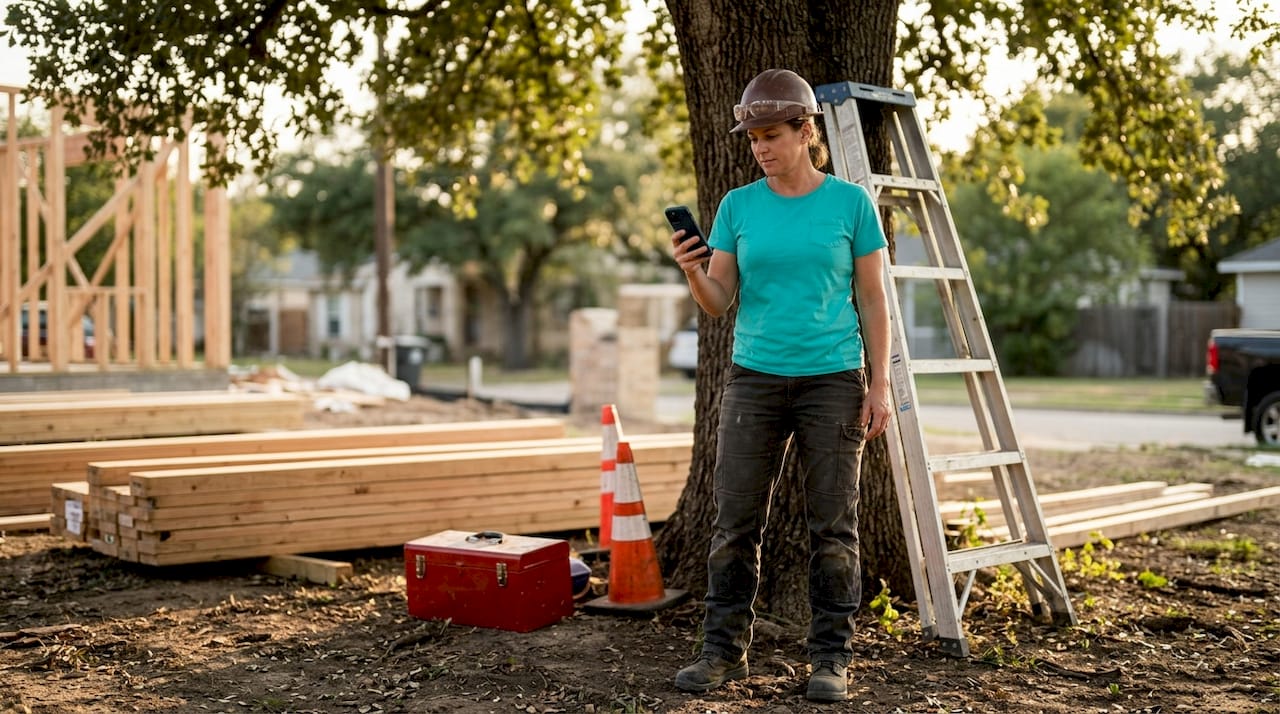
Only 36% of Australian small and medium enterprises effectively use SEO. That gap means most of your competitors are leaving local search visibility on the table. Tradies who invest in local SEO now build a compounding advantage that grows over time without requiring ongoing ad spend.
What key components make up an effective local SEO strategy?
An effective local SEO strategy for trades rests on five core components. Each one reinforces the others, and neglecting any single element weakens the whole system.
- Google Business Profile optimisation. Google Business Profile is not just a digital business card. It is the most powerful asset for local SEO visibility in map pack results. Setup is free and takes approximately 20 minutes. Your profile must include accurate service areas, current photos, business hours, and a clear description of your services.
- Hyper-local keyword research. Generic keywords like “plumber” are too broad and too competitive. Phrases like “blocked drain plumber Fitzroy” or “emergency electrician Geelong” attract searchers with high purchase intent. These hyper-local, high-intent searches yield more valuable leads than any broad keyword.
- Suburb-specific landing pages. Suburb-specific landing pages combined with an optimised Google Business Profile amplify local authority and improve rankings significantly. Each page should address the specific suburb, the service offered, and include locally relevant content.
- Consistent local citations. A citation is any online mention of your business name, address, and phone number. Directories like Yellow Pages, True Local, and Hipages must all carry identical information.
- Online reviews and reputation management. Tradies should aim to secure 3 to 5 new genuine client reviews every month. Reviews build trust with both Google and potential clients.
Pro Tip: Ask every satisfied client for a Google review immediately after completing a job. A simple text message with a direct link to your Google Business Profile review page removes all friction and dramatically increases the response rate.
How does local SEO differ from general SEO for trades?
General SEO targets broad, national, or industry-wide search terms. Local SEO targets geographic containment. The difference is not just semantic. It changes every decision you make about keywords, content, and link building.
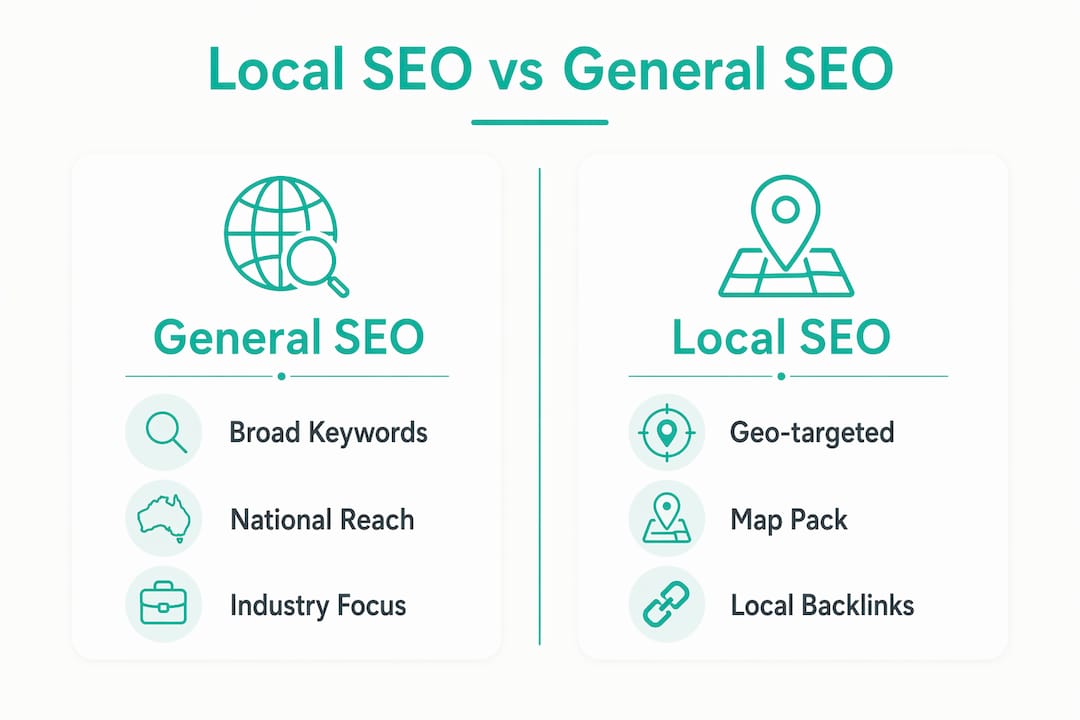
| Factor | General SEO | Local SEO for trades |
|---|---|---|
| Keyword focus | “plumber,” “electrician,” “builder” | “plumber Northcote,” “electrician Ballarat” |
| Search results | Organic blue links | Google Map Pack plus organic results |
| Link building | National directories, industry sites | Councils, community groups, local directories |
| Content strategy | Broad service guides | Suburb-specific service pages |
| Conversion speed | Slower, research-phase traffic | Fast, often same-day bookings |
The Google Map Pack, the three business listings that appear above organic results on a local search, is where most local trade enquiries originate. Ranking in the Map Pack requires a well-maintained Google Business Profile, strong local citations, and consistent reviews. General SEO tactics alone will not get you there.
Mobile-first local searches by homeowners often convert quickly, so mobile optimisation and fast-loading local pages are critical. A slow website that looks poor on a phone loses the lead before you even know it existed.
Local backlinks from councils, community groups, and local directories carry higher value than generic national backlinks for trades. A link from your local council’s business directory or a community association website signals geographic relevance to Google in a way that a national link cannot replicate.
Pro Tip: Sponsor a local sporting club or community event and request a link from their website. It costs little, builds goodwill in your community, and creates a genuine local backlink that strengthens your geographic authority.
What common local SEO mistakes do trades make and how to avoid them?
Most tradies who struggle with local visibility are making the same handful of mistakes. Recognising them is the first step to fixing them.
-
Chasing broad keywords. Ranking nationally for broad trade terms is ineffective. A plumber in Bendigo does not need to rank for “plumber Australia.” They need to rank for “plumber Bendigo” and “hot water system repair Bendigo.” Broad keywords attract the wrong traffic and rarely convert.
-
Incomplete or outdated Google Business Profiles. A half-baked profile loses leads to competitors who maintain theirs actively. Missing service areas, no photos, and an outdated phone number all signal to Google that your business is less trustworthy than a competitor with a complete profile.
-
Ignoring client reviews. Reviews are not optional extras. They are ranking signals. A tradie with 40 recent reviews will consistently outrank a competitor with 5 old ones, even if that competitor has a better website.
-
Inconsistent NAP citations. NAP stands for Name, Address, and Phone number. Inconsistent NAP citations confuse Google and damage rankings. If your business is listed as “Smith Plumbing” on one directory and “Smith Plumbing Services” on another, Google cannot confidently confirm your business details. Audit every directory listing and make them identical.
-
Neglecting mobile optimisation. A tradie’s website that loads slowly or displays poorly on a mobile phone loses leads immediately. Most local searches happen on mobile devices, and Google ranks mobile-friendly sites higher in local results.
Pro Tip: Use Google Search Console and Google Business Profile Insights together. Search Console shows which search terms bring visitors to your website. Business Profile Insights shows how customers found your listing. Together, they reveal exactly where your local SEO is working and where it is not.
How can trades measure the success of their local SEO efforts?
Measurement turns guesswork into a clear picture of what is working. Effective measurement includes monitoring Google Business Profile insights, local keyword rankings, and organic traffic sourced from locality-specific keywords.
- Google Business Profile Insights. This free dashboard shows how many people found your profile, what search terms they used, and whether they called, visited your website, or requested directions. Check it monthly.
- Google Analytics. Track organic traffic to your suburb-specific landing pages. A steady increase in visitors from local search terms confirms your content strategy is working.
- Local keyword rankings. Use a tool like Google Search Console to monitor where your pages rank for suburb-level keywords. A page moving from position 15 to position 4 for “electrician Sunshine” represents a significant lead-generation gain.
- Enquiry source tracking. Ask every new client how they found you. This simple question attributes real jobs to your SEO investment and shows which channels deliver the best return.
- Review growth. Track the number and recency of your Google reviews month by month. Consistent growth signals an active, trusted business to both Google and potential clients.
Paid Google Ads in high-demand trades can cost $20–$30 per click and require continuous spend with no compounding returns. Local SEO builds a compounding asset. Effort invested today yields ongoing free leads, and the advantage grows as your profile, reviews, and content accumulate over time.
Key takeaways
Local SEO for trades is the most cost-effective way for trade businesses to generate consistent, local leads without relying on paid advertising.
| Point | Details |
|---|---|
| Google Business Profile is foundational | Complete and maintain your profile with photos, accurate service areas, and current contact details. |
| Hyper-local keywords convert faster | Target suburb-level phrases like “plumber Fitzroy” rather than broad terms to attract ready-to-book clients. |
| Consistent NAP citations build trust | Identical business details across all directories prevent Google from discounting your local authority. |
| Reviews drive rankings and trust | Aim for 3 to 5 new genuine reviews per month to signal an active, credible business to Google. |
| Measurement confirms ROI | Track Business Profile Insights, keyword rankings, and enquiry sources monthly to attribute real jobs to SEO. |
What I have learned about local SEO for trades after years in the field
The tradies I see winning in local search share one habit: they treat their Google Business Profile like a living asset, not a set-and-forget task. They update photos after every job, respond to every review, and check their Insights monthly. That consistency compounds over time in a way that no quick-fix tactic can replicate.
The biggest mistake I see is tradies spending money on ads before their organic presence is solid. Regularly obtaining genuine customer reviews builds social proof that increases trust signals to Google and potential clients. No ad campaign delivers that kind of credibility. Reviews are free, and they keep working long after the job is done.
My honest advice: start with your Google Business Profile, then build suburb-specific pages for your top three service areas, then focus on reviews. Do those three things consistently for six months before worrying about anything else. The compounding effect of that foundation will outperform any shortcut.
— Christopher
How Westlegacygroup helps trades build local SEO that delivers real jobs
Westlegacygroup has spent over two decades helping small businesses build digital foundations that generate real results. For trades, that means practical, affordable local SEO services built around Google Business Profile optimisation, suburb-specific content, and citation management.
If you are a tradie ready to move beyond word of mouth and paid ads, Westlegacygroup offers digital marketing services for trades designed to fit small business budgets. The team also provides guidance on high-converting website design to make sure your site turns local search traffic into booked jobs. Every service is available as a single item or subscription package, built to be affordable for every stage of your business.
FAQ
What is local SEO for trades?
Local SEO for trades is the process of optimising a trade business’s online presence to appear in geographically relevant search results. It focuses on tools like Google Business Profile, suburb-specific content, and local citations to attract nearby clients.
How long does local SEO take to show results for trades?
Local SEO typically builds momentum over three to six months. Google Business Profile improvements and new reviews can produce visible results faster, often within four to eight weeks of consistent effort.
What is the most important local SEO tool for trades?
Google Business Profile is the single most important tool for local SEO visibility in map pack results. A complete, actively maintained profile is the foundation of every effective local SEO strategy for trades.
How many Google reviews should a tradie aim for each month?
Tradies should aim to secure 3 to 5 new genuine client reviews every month. Consistent review growth signals an active, credible business to Google and improves local rankings over time.
Why do inconsistent business details hurt local SEO?
Inconsistent name, address, and phone number details across online directories confuse Google and weaken local ranking signals. All directory listings must carry identical business information to build trust and maintain strong local authority.