

Growing a local online presence is defined as the deliberate effort to increase your business’s visibility, credibility, and engagement within your nearby community through digital channels. For small business owners, this is not optional. 84% of consumers search for local businesses daily, and 53% will walk away from a purchase if they find inaccurate information online. That single statistic tells you everything about the cost of neglect. The industry term for this discipline is local SEO, and the ways to grow local online presence covered here span Google Business Profile optimisation, citation management, geo-targeted content, review strategy, and performance tracking. Each tactic is practical, affordable, and built for businesses operating in real communities.
How to optimise your Google Business Profile for maximum local impact
Your Google Business Profile is the single most powerful free tool for local search visibility. A fully complete profile tells Google exactly who you are, what you offer, and where you operate. An incomplete one leaves that work to chance.
Follow these steps to get the most from your profile:
- Claim and verify your listing through Google Search or Google Maps. Unverified profiles rank poorly and cannot be fully managed.
- Complete every field including business category, service areas, opening hours, website URL, and a detailed business description using natural language.
- Add photos regularly. Businesses with photos receive significantly more direction requests and website clicks than those without.
- Publish Google Posts at least twice a month. Posts can highlight offers, events, or news and send freshness signals directly to Google’s local ranking systems.
- Enable the Q&A section and seed it with the questions your customers actually ask. This content appears in your profile and can influence AI-generated search answers.
- List your services and products with accurate descriptions and prices where possible. This detail helps Google match your profile to specific search queries.
Fresh content and active management of your Google Business Profile are critical for sustained local search success. Google treats your profile as a living signal, not a set-and-forget directory entry.
Pro Tip: Seed your Q&A section with three to five questions that mirror what customers ask before they book or buy. Write the answers yourself so the information is accurate and on-brand.

Does citation consistency really affect local search rankings?
Yes. Citation consistency, meaning your business name, address, and phone number (NAP) appearing identically across every directory and platform, is a foundational local SEO standard. A single wrong digit in your business details can quietly undercut months of SEO work. Google cross-references your NAP across dozens of sources to confirm your business is legitimate and trustworthy.
The two main categories of citation sources carry different weight:
| Citation type | Examples | SEO impact |
|---|---|---|
| Authoritative directories | Google Business Profile, Apple Maps, Yelp, Yellow Pages | High. These are primary trust signals for Google. |
| Industry-specific directories | Local trade associations, chamber of commerce listings | Medium to high. Strong relevance signals for your niche. |
| Generic directories | General business listing sites with low editorial standards | Low. Useful for coverage but not for authority. |
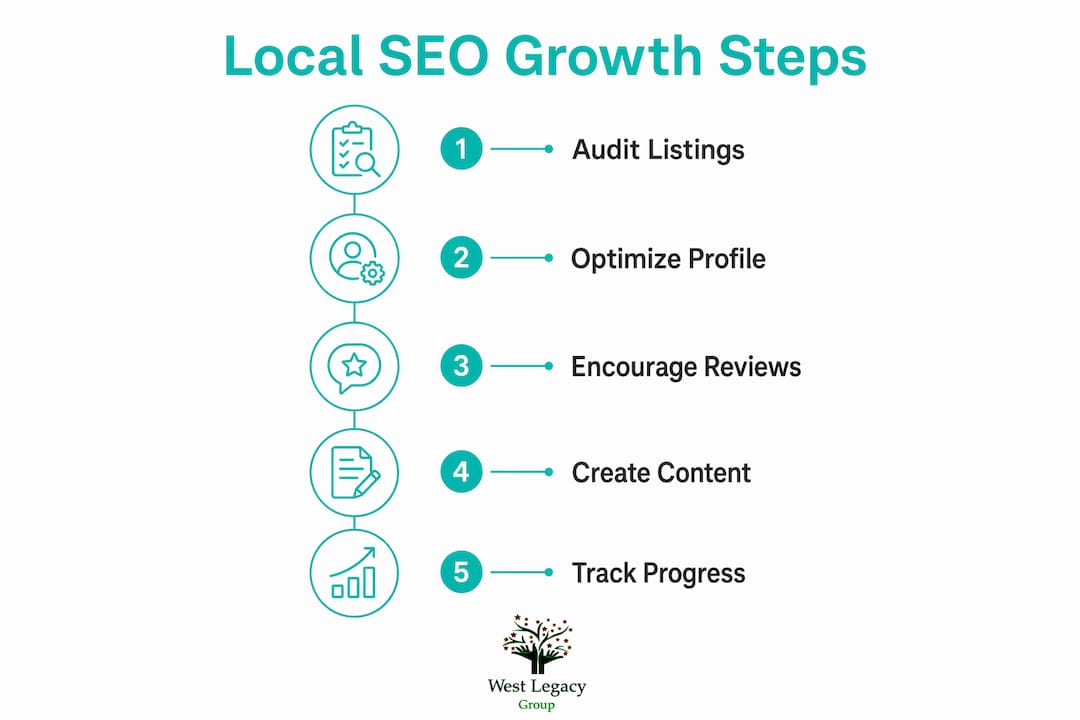
Start your audit by searching your business name and phone number across the top directories. Look for variations in spelling, abbreviations, or outdated addresses. Fix the highest-authority listings first, then work down the list.
Pro Tip: Keep a simple spreadsheet tracking every directory where your business is listed, the login details, and the date you last verified the information. A quarterly check takes less than an hour and protects months of ranking work.
Why does generic location content fail local SEO?
Generic content that claims to serve “all suburbs” gives Google nothing specific to work with. Tailored geo-specific pages improve search rankings and customer trust far more effectively than a single catch-all service page. Each suburb or neighbourhood you serve deserves its own page that answers real, local questions.
Strong local content includes:
- Suburb-specific service pages that name the location in the heading, the body text, and the page URL. A plumber in Bendigo should have a dedicated page for Bendigo plumbing services, not just a generic services page.
- Answers to local questions such as “What are the trading hours for [business] in [suburb]?” or “Does [business] service [specific area]?” These match the way real customers search.
- Embedded Google Maps on your contact and location pages. This reinforces your geographic relevance to both Google and your visitors.
- Local customer testimonials that mention the suburb or area. A review from a customer in Castlemaine carries more local signal than a generic five-star rating.
- References to local landmarks, events, or community context where they fit naturally. This signals genuine community connection rather than manufactured content.
AI search models value structured content with clear headings, FAQs, and lists. Writing your local pages with this structure means they perform well in both traditional Google results and AI-generated answers.
Pro Tip: Use plain, descriptive headings on your location pages such as “Plumbing services in Bendigo” rather than clever or vague titles. Both users and AI search models read headings first to understand page content.
How do reviews and social media build local trust and visibility?
Reviews are a direct ranking signal for local search prominence. Review volume, velocity, and diversity all generate key signals that strengthen your position in local search results. A business that receives a steady stream of varied reviews, mentioning different services, staff members, or locations, signals to Google that it is active, trusted, and worth recommending.
Ethical review acquisition means asking satisfied customers directly, making it easy with a short link to your Google Business Profile, and responding to every review you receive. Responding to negative reviews is especially important. A professional, constructive reply shows potential customers that you take feedback seriously.
Social media engagement compounds your review strategy. Local Facebook groups, community pages, and Instagram location tags all create touchpoints that connect your business to your area. Effective local social media tactics include:
- Posting about local events, sponsorships, or community involvement
- Tagging your suburb or town in every post
- Sharing customer stories with their permission
- Engaging with comments and questions within 24 hours
- Partnering with other local businesses for cross-promotion
Local backlinks from reputable local websites and media coverage significantly impact your local SEO authority. A mention in a local community blog or a link from your chamber of commerce listing carries far more weight than a generic directory entry.
How do you track and improve your local online presence over time?
Monitoring your local presence is not a one-off task. Consistently auditing your Google Business Profile and citations reveals gaps that cause visibility to plateau. Without regular checks, you will not know what is working or where you are losing ground.
The table below outlines the key activities, their frequency, and their impact:
| Activity | Recommended frequency | Impact on local visibility |
|---|---|---|
| Google Business Profile audit | Monthly | High. Catches outdated info and missed posts. |
| Citation consistency check | Quarterly | High. Prevents NAP errors from compounding. |
| Review monitoring and response | Weekly | High. Signals activity and builds trust. |
| Local keyword ranking check | Monthly | Medium. Shows movement in search positions. |
| Website traffic and local page performance | Monthly | Medium. Identifies which pages attract local visitors. |
| Local backlink audit | Every six months | Medium. Confirms authority links remain active. |
Use Google Search Console to track which search queries bring visitors to your site. Pair this with your Google Business Profile insights to see how customers find and interact with your listing. This combination gives you a clear picture of what is working without needing expensive software.
Pro Tip: Integrate your online efforts with traditional marketing. If you run a local print ad or sponsor a community event, mention it in a Google Post and on social media. This cross-channel consistency reinforces your local presence both online and offline.
For a structured approach to tracking all of this, the local SEO checklist from West Legacy Group covers the key audit steps in one place.
Key takeaways
Growing a local online presence requires consistent action across your Google Business Profile, citation management, geo-targeted content, review strategy, and performance tracking.
| Point | Details |
|---|---|
| Google Business Profile is foundational | Complete every field, post regularly, and treat your profile as a living asset. |
| NAP consistency protects your rankings | One wrong digit across directories can undermine months of SEO effort. |
| Geo-targeted pages outperform generic content | Build a dedicated page for each suburb you serve with specific, relevant content. |
| Reviews and social signals compound over time | Steady, diverse reviews and active community engagement strengthen local prominence. |
| Regular audits reveal hidden gaps | Monthly and quarterly checks keep your local presence accurate and competitive. |
What I have learned about local SEO that most guides skip
Working with local businesses across regional and suburban Australia, I have seen the same pattern repeat. Business owners invest time in their website and then treat their Google Business Profile as an afterthought. That is the wrong priority order. Your Google Business Profile is often the first thing a potential customer sees, and it needs the same attention as your website.
The other thing I have noticed is that quality consistently beats quantity. Ten citations on authoritative, relevant directories outperform a hundred listings on low-grade generic sites. The same applies to reviews. Twenty detailed, genuine reviews from real customers carry more weight than fifty generic one-liners.
Modern local SEO requires dual optimisation for both traditional search and AI-driven answers. This is the shift I am watching most closely right now. AI search tools like Perplexity and Google’s AI Overviews pull answers from structured, clearly written content. If your local pages are vague or poorly organised, they will not be cited. If they are specific, well-structured, and genuinely useful, they will be. That is a real competitive advantage for small businesses willing to put in the work.
The businesses I see winning locally are not the ones with the biggest budgets. They are the ones who show up consistently, respond to every review, keep their information accurate, and create content that actually answers local questions. For practical steps on improving local search rankings, the fundamentals have not changed, but the execution needs to account for AI search in 2026.
— Christopher
West Legacy Group can help you build your local online presence
West Legacy Group has been helping small businesses grow their digital presence for years, with affordable SEO services built specifically for local operators and start-ups.
Whether you need a structured plan to improve your local search rankings or ongoing reporting to track your progress, West Legacy Group offers both as standalone services and subscription packages. Start by building a plan that fits your business and your budget. Visit the SEO plan builder to create a tailored approach, or check out the SEO reporting service to see exactly how your local presence is performing month by month.
FAQ
What is a local online presence?
A local online presence is the visibility and engagement your business has within your nearby community through digital channels, including search engines, directories, social media, and review platforms.
How does Google Business Profile affect local search rankings?
A fully complete and regularly updated Google Business Profile sends freshness and relevance signals to Google, directly improving your position in local search results and Google Maps.
How many citations does a local business need?
Quality matters more than quantity. Focus on consistent, accurate listings across authoritative directories such as Google Business Profile, Apple Maps, and industry-specific platforms rather than chasing volume on low-grade sites.
How often should I ask customers for reviews?
Ask every satisfied customer, every time. Review velocity, meaning the steady, ongoing receipt of new reviews, is a key local search signal. A burst of reviews followed by silence is less effective than a consistent flow.
Does social media directly improve local SEO rankings?
Social media does not directly change your search rankings, but active community engagement builds brand awareness, drives traffic to your website, and generates the local signals that support your overall local SEO strategy.