

Dwell time is the time a searcher spends on your page after clicking from a search engine results page (SERP) and before returning to that same SERP. For local SEO, it functions as an indirect signal of searcher satisfaction rather than a single ranking lever you can dial up. The practical verdict: stop trying to inflate seconds and start focusing on whether your page actually answers what the searcher came for.
- Definition: Dwell time measures the round trip from SERP click to SERP return. Only search engines can see the full picture.
- Local SEO verdict: Satisfaction signals matter. Raw time does not.
- Immediate action: For quick local queries (address, phone, hours), a short visit that answers the question is a win. For service or product pages, richer content keeps people engaged longer.
Key takeaways
Dwell time is an indirect satisfaction signal, not a direct ranking metric: the priority for local SEO is eliminating pogo-sticking by matching page content to search intent, not inflating time-on-page.
| Point | Details |
|---|---|
| Dwell time definition | Time from SERP click to SERP return; only search engines can measure it directly. |
| Not a direct ranking factor | Google publicly downplays raw time metrics; focus on intent match and reducing pogo-sticking instead. |
| Measure with proxies | Use GA4 engaged sessions and Search Console CTR data filtered to organic traffic to approximate satisfaction. |
| Intent sets the benchmark | A 20-second visit is a success for a “find our address” page; the same duration on a service comparison page is a warning sign. |
| West Legacy Group | Offers audit-first local SEO, GA4 setup, and website design for Australian small businesses with flexible, affordable packages. |
Table of Contents
- What dwell time actually measures and how it differs from related metrics
- Is dwell time a ranking factor? What the evidence actually says
- How to approximate dwell time for your local pages
- What counts as good dwell time? Benchmarks and intent
- Practical tactics to improve dwell-time signals on local pages
- One-page audit checklist for Australian local businesses
- Common mistakes that hurt your engagement signals
- How your Google Business Profile affects dwell time and local SEO
- How dwell time plays out differently in local SEO versus broader SEO
- How different local business types should think about dwell time
- How device type and traffic source change what your metrics mean
- Prioritise satisfaction over vanity metrics
- West Legacy Group helps Australian local businesses fix what actually matters
- Sources
What dwell time actually measures and how it differs from related metrics
Dwell time is only triggered when a visit originates from a SERP click. A user who lands on your page from a Facebook ad or a direct bookmark does not contribute to dwell time at all. That origin requirement is what separates it from every other engagement metric your analytics platform reports.
Here is where most local business owners get confused:
- Bounce rate: The percentage of sessions where a user visits only one page. A bounce can still have a long dwell time if the user read everything before leaving.
- Time on page: Calculated by analytics platforms using the gap between two page-view events. It cannot be measured for the last page in a session, so it routinely undercounts actual reading time.
- Session duration: The total time across all pages in a single visit. One long page view can inflate this figure even when every other page was ignored.
- Pogo-sticking: A specific behaviour where a user clicks your result, returns to the SERP almost immediately, and clicks a different result. This is the pattern most directly associated with dissatisfaction signals.
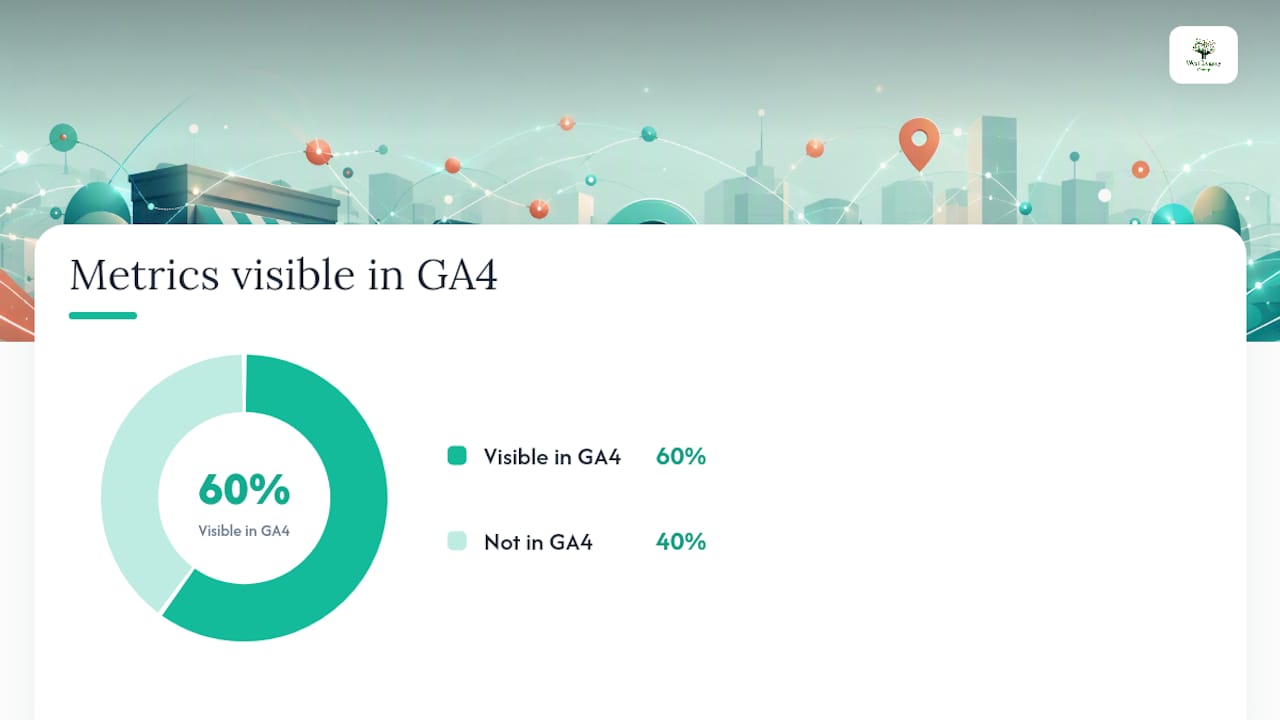
The critical limitation: true dwell time is only visible to search engines. Google Analytics 4 (GA4) and Google Search Console do not expose it as a metric. What you can measure are proxies: average engagement time, engaged sessions, and session timing filtered to organic traffic. These are useful approximations, not the real number.
| Metric | What it measures | Visible in GA4? | SERP origin required? |
|---|---|---|---|
| Dwell time | Time from SERP click to SERP return | No | Yes |
| Time on page | Time between page-view events | Yes | No |
| Session duration | Total time across all pages in a visit | Yes | No |
| Bounce rate | Single-page sessions as a percentage | Yes | No |
| Pogo-sticking | Rapid SERP return then click to next result | No | Yes |
Is dwell time a ranking factor? What the evidence actually says
Google has not confirmed dwell time as a direct ranking factor. Historically, Google spokespeople have pushed back on raw time-based signals, noting that a short visit can indicate a successful answer just as easily as a failed one.
That said, the picture is more nuanced than Google’s public statements suggest. Leaked internal documents and antitrust testimony indicate that search engines track aggregated click behaviour and likely distinguish “long clicks” (a user who stays and does not return quickly) from pogo-sticks (a user who bounces straight back). The implication for local SEO is clear: Google probably does not reward you for keeping someone on your page for three minutes, but it may penalise you if your result consistently sends people straight back to the SERP.
Pogo-sticking is the pattern to avoid. When a local searcher clicks your result, immediately returns to Google, and clicks a competitor, that is a strong dissatisfaction signal. Fix the mismatch between what your snippet promises and what your page delivers, and you address the root cause.
Pro Tip: Don’t obsess over average time-on-page figures in GA4. Instead, look for pages where Search Console shows a reasonable click-through rate but your GA4 engagement time is very low. That combination is your clearest proxy for a pogo-sticking problem.
How to approximate dwell time for your local pages
You cannot calculate true dwell time because only the search engine sees the return event. What you can do is build a reliable proxy using tools you already have access to.
Step-by-step workflow:
- Open GA4 and filter to organic traffic. Go to Reports > Acquisition > Traffic Acquisition, then filter the channel group to “Organic Search.”
- Review average engagement time per landing page. Navigate to Reports > Engagement > Landing Page. Sort by average engagement time. Pages with very low engagement time (under 20–30 seconds) on organic traffic warrant investigation.
- Cross-reference with Search Console. In Google Search Console, go to Performance > Search Results. Filter by page URL for the pages flagged in step 2. Check whether click-through rate (CTR) is reasonable but impressions are high. A high-impression, low-CTR page may have a snippet problem; a high-CTR, low-engagement page likely has a content mismatch.
- Add a heatmap or session recording tool. Tools like Microsoft Clarity (free) or Hotjar let you watch how real users interact with your local pages. Look for scroll depth: if most users never scroll past the fold, your key information may be buried.
- Segment by device. In GA4, add a secondary dimension for device category. Mobile and desktop users behave very differently on local pages.
Tools you need:
- Google Search Console (free)
- GA4 (free)
- Microsoft Clarity (free) or Hotjar (paid tiers available in Australia)
Pro Tip: Small sample sizes distort everything. Before acting on low engagement time for a local page, confirm the page has received at least 100 organic sessions in the period you are reviewing. Fewer than that and you are reading noise, not signal.
What counts as good dwell time? Benchmarks and intent
There is no universal benchmark for dwell time, and anyone who gives you a single number without caveats is oversimplifying. Intent and page type change the target entirely.
Informational content dwell time varies widely depending on context; no single benchmark applies, especially not for most local pages. Short dwell time can indicate success for quick local lookups like a phone number, address, or opening hours. If a searcher finds your number in 15 seconds and calls you, that is a perfect outcome regardless of what the clock says.
How to set intent-based targets:
- Navigational queries (e.g., “West Legacy Group Sydney”): 15–30 seconds is fine. The user wanted to confirm your details.
- Transactional queries (e.g., “plumber Bondi book online”): 45–90 seconds is reasonable. The user is comparing and deciding.
- Informational queries (e.g., “how much does a kitchen renovation cost in Melbourne”): 2–4 minutes is a realistic target. The user wants depth.
Shopify’s guidance frames dwell time as a proxy for engagement and recommends focusing on user satisfaction rather than raw seconds. That framing holds for local pages too. Ask yourself: did the user get what they came for? That question is more useful than any stopwatch.
Practical tactics to improve dwell-time signals on local pages
The goal is reducing pogo-sticking and increasing satisfaction. These tactics are ordered by impact and ease of implementation for small Australian businesses.
-
Match your snippet to your page content. Your title tag and meta description set an expectation. If the page does not deliver on that promise within the first scroll, users leave. Audit every local landing page: does the H1 match the meta title? Does the opening paragraph answer the query directly?
-
Put your most important local information above the fold. Phone number, address, and a click-to-call button should be visible without scrolling on mobile. Most local searchers on a phone want one of these three things.
-
Improve mobile page speed. Compress images using tools like Squoosh or ShortPixel. Enable browser caching. A page that loads in under 2.5 seconds on mobile retains far more users than one that takes 5 seconds.
-
Use clear, scannable content structure. Break up text with H2 and H3 subheadings, short paragraphs, and bullet points where appropriate. Local service pages benefit from a clear “What we do / Where we work / How to book” structure.
-
Add internal links to related local pages. A plumber’s page for “emergency plumbing Sydney” should link to “hot water repairs Sydney” and “blocked drains Sydney.” This keeps engaged users on your site and signals topical depth to Google. See our guide on local SEO strategies for more on building this kind of local content architecture.
-
Embed a Google Map. For location-based businesses, an embedded map on your contact or location page gives users a reason to stay and interact.
-
Add a clear, local call to action. “Call us now in Brisbane” or “Book a free quote for Melbourne homes” performs better than a generic “Contact us” button. Specificity builds trust and reduces hesitation.
Pro Tip: Avoid padding content to inflate time-on-page. Adding filler paragraphs frustrates users who came for a quick answer and increases pogo-sticking — the opposite of what you want.
One-page audit checklist for Australian local businesses
Run this audit in a single session. It covers the most common causes of poor engagement on local pages.
Fix in 15 minutes:
- Check your page title and meta description in Search Console. Do they accurately describe what the page delivers?
- Open your local landing page on a mobile phone. Is your phone number visible without scrolling?
- Check page load speed using Google PageSpeed Insights. Is your mobile score above 70?
Fix in 2 hours:
- Review GA4 engagement time for your top five organic landing pages. Flag any page under 30 seconds average engagement time.
- Cross-reference flagged pages in Search Console. Are impressions high but CTR low? That points to a snippet problem.
- Check that your NAP (name, address, phone number) is consistent across your website, Google Business Profile, and any directory listings.
- Confirm your local business schema markup is in place. Use Google’s Rich Results Test to verify.
- Add or update internal links between related local service pages.
Fix in 1 week:
- Install Microsoft Clarity or Hotjar on your site and review session recordings for your top local pages. Look for rage clicks, early exits, and scroll depth below 30%.
- Update any page where the content does not match the search intent implied by its top organic queries (visible in Search Console under Performance > Queries for that page).
For a deeper audit framework, the local SEO checklist for small businesses covers additional technical and off-page factors worth reviewing alongside this engagement-focused check.
Common mistakes that hurt your engagement signals
These are the errors West Legacy Group sees most often when auditing local business pages.
- Padding content to inflate time-on-page. Adding unnecessary paragraphs, repetitive FAQs, or filler text does not fool search engines. It frustrates users who wanted a quick answer and sends them straight back to the SERP.
- Snippet and page mismatch. Writing a meta description that promises “same-day service in Perth” when the page is a generic services overview is the primary driver of pogo-sticking. The fix is simple: make the page deliver exactly what the snippet promises.
- Ignoring mobile behaviour. Desktop users tolerate slower loads and denser content. Mobile users, who make up the majority of local searches in Australia, do not. A page that looks fine on a laptop may be haemorrhaging mobile visitors within seconds.
- Confusing time-on-page with dwell time. GA4’s engagement time is a proxy, not the real metric. A page with a 4-minute average engagement time is not automatically performing well if those sessions are from direct traffic or social referrals, not organic search.
- Acting on small samples. A local page with 40 organic sessions in a month does not have enough data to draw conclusions from engagement time alone. Combine it with Search Console position and CTR trends before making structural changes.
How your Google Business Profile affects dwell time and local SEO
Your Google Business Profile (GBP) listing sits between the searcher and your website. When a local searcher finds your GBP listing in the map pack and gets everything they need there (address, hours, phone number, reviews), they may never visit your website at all. That is not a failure. It is a successful local interaction, and Google’s systems are designed to reward it.
The connection to dwell time works in both directions. A well-optimised GBP listing pre-qualifies visitors before they click through to your site. Someone who has already read your reviews, confirmed your hours, and seen your photos is more likely to stay on your website and take action than someone who clicked through cold. That pre-qualified traffic tends to produce better engagement signals across the board.
Conversely, a poorly maintained GBP listing with outdated hours or a missing phone number pushes users to your website for information they expected to find in the listing. If your website then fails to surface that information quickly, pogo-sticking follows. Keep your GBP listing complete and current as a first-line defence against poor engagement. For broader tactics on growing your local presence, the guide on ways to grow your local online presence covers GBP optimisation alongside website improvements.
How dwell time plays out differently in local SEO versus broader SEO
In broader SEO, informational content competes on depth and authority. A 2,000-word guide on “how to choose a standing desk” earns its dwell time because the searcher genuinely needs time to read and compare. Longer engagement is a reasonable proxy for satisfaction in that context.
Local SEO operates differently. The dominant intent behind most local queries is transactional or navigational: find a business, confirm it is open, get directions, or call. A local plumber’s service page does not need to keep someone reading for four minutes. It needs to surface the phone number, service area, and a trust signal (reviews, licence number, years in business) within seconds. Success looks like a short, decisive visit that ends in a phone call or a booking, not a long scroll session.
This distinction matters when you are interpreting your analytics. A local café’s “find us” page with a 25-second average engagement time and a high rate of subsequent phone calls is performing well. The same 25-second average on a “wedding catering packages” page, with no follow-up actions, suggests the content is not giving people enough to make a decision.
How different local business types should think about dwell time
The right engagement benchmark shifts depending on what your business sells and how people buy it.

Service-based businesses (tradies, consultants, health practitioners) typically attract searchers who are comparing providers before committing. A plumber, electrician, or physio practice benefits from pages that include clear service descriptions, a service area, pricing signals (even a range), and social proof. These elements give a motivated searcher a reason to stay for 60–90 seconds and then call. Very short engagement time on these pages usually means the content is not answering the comparison questions the searcher arrived with.
Product-based local businesses (retail shops, nurseries, hardware stores) face a different challenge. Searchers often want to confirm stock availability or store location before visiting in person. For these businesses, a short, efficient visit that ends in a direction request or a click-to-call is the ideal outcome. Trying to keep a “where is your store” searcher on the page for two minutes is counterproductive.
Experience-based businesses (restaurants, event venues, tourism operators) sit in the middle. A searcher choosing a restaurant for a birthday dinner wants photos, a menu, and reviews. Engagement time of 90 seconds to 3 minutes is realistic and healthy for these pages. Thin content or low-quality photos will cut that short and send the searcher back to Google.
The practical takeaway: match your content depth to the decision complexity your customer faces, not to an arbitrary time target. For more on building content that fits your specific local business type, the local content strategy guide is worth reading alongside this article.
How device type and traffic source change what your metrics mean
Mobile users dominate local search in Australia. They tend to scroll less, read less, and act faster than desktop users. A mobile session of 20–30 seconds on a local page is often a success; the same duration on a desktop session reviewing a detailed service page may indicate the user left unsatisfied.

Segment your GA4 data by device category before drawing any conclusions from engagement time. A page with a 45-second average engagement time overall may show 25 seconds on mobile and 90 seconds on desktop. Those two audiences need different things from the same page, and the aggregate figure hides both stories.
Traffic source matters just as much. Organic search traffic from Google is the only source that contributes to dwell time as a satisfaction signal. Direct traffic, social referrals, and email clicks all land on your pages with different intent and context. If you are reviewing engagement time to proxy dwell time, filter your GA4 reports to organic search sessions only. Mixing all traffic sources together inflates or deflates the figure depending on your channel mix and tells you nothing useful about how SERP visitors are behaving.
Prioritise satisfaction over vanity metrics
The businesses that get this right are not the ones obsessing over average session duration. They are the ones who ask a simpler question: did the person who clicked our result get what they came for?
The evidence on dwell time as a ranking factor is genuinely mixed. Google publicly downplays it. Leaked signals suggest click behaviour matters in aggregate. What that means practically is that you should not be chasing seconds, but you absolutely should be fixing pages that consistently send people back to the SERP. Those are two very different priorities, and conflating them leads to the padding mistake described earlier.
For Australian local businesses, the most productive framing is this: treat your local pages as answers to specific questions, not as content to be consumed. A contact page answers “how do I reach them.” A service page answers “can they solve my problem and should I trust them.” When the page answers its question clearly and quickly, engagement follows naturally. When it does not, no amount of added content will fix the underlying mismatch.
SEO results take time to show up in rankings, but engagement improvements on local pages often produce measurable changes in GA4 within 4–8 weeks of implementation. That is a realistic window to set with clients and with yourself.
West Legacy Group helps Australian local businesses fix what actually matters
West Legacy Group works with small businesses and local operators across Australia on exactly the issues this article covers: local SEO, Google Business Profile management, GA4 setup and reporting, website design for mobile performance, and content that matches local search intent.
The difference with West Legacy Group is the audit-first approach. Before recommending changes, the team reviews your actual engagement data, your Search Console performance, and your current local page structure. Services are available as single items or subscription packages, so there is no pressure to commit to a large retainer before you know what needs fixing. If you want a starting point, the build your own SEO plan tool lets you select the services that match your current priorities and budget. For businesses that need a full website overhaul to fix mobile speed and local UX issues, the small business website packages are built specifically for that. Get in touch at Westlegacygroup to start with a no-obligation conversation.
Sources
The following resources were referenced in this article and are worth bookmarking for further reading and implementation.